
2026: AI as a new direction for a university breakthrough
2026 has been declared the Year of Digitalisation and Artificial Intelligence in the Republic of Kazakhstan. This is not a political slogan but a concrete strategic direction for national development, deeply integrated into the economy, education and public administration.
Kazakhstan has developed a long-term concept for advancing artificial intelligence for 2024–2029. It focuses on introducing AI solutions into education, the economy and public administration. The concept envisages a national platform and the development of human and scientific capacity.
Human capital is the main driver of the future development of artificial intelligence. AI is therefore becoming a compulsory subject at all universities in the country, including Academician А. Қуатбеков Peoples’ Friendship University. Currently, 93 universities have introduced AI courses, and more than 390 000 students have received training — and this is only the beginning.
25 new AI degree programmes are being developed, covering fields from medicine to transport AI systems. National standards for introducing AI into education have been approved: ethics, data protection and academic integrity have become essential parts of this approach. Kazakhstan is actively developing international research cooperation, including partnerships with China and other countries, while a concept for a university specialising in artificial intelligence, drawing on the experience of global leaders, is under discussion. Government programmes are being launched to introduce AI into public administration, improve public service efficiency and offer citizens new digital services.
In the Year of AI, 2026, Academician А. Қуатбеков Peoples’ Friendship University must become a centre of knowledge, innovation and expertise. By bringing together the knowledge of the future, the university needs to introduce specialised AI courses and interdisciplinary programmes; train professionals not only to adapt but to create AI technologies, products and startups; advance research into language models and AI applications suited to the Kazakh cultural and linguistic context; develop its own commercially promising AI solutions and strengthen the country’s technological sovereignty; build strong connections among government, business and international research centres; become a platform for practical internships, hackathons, startup incubators and joint projects; and promote ethical AI that respects individual rights and cultural diversity and strengthens public trust in technology.
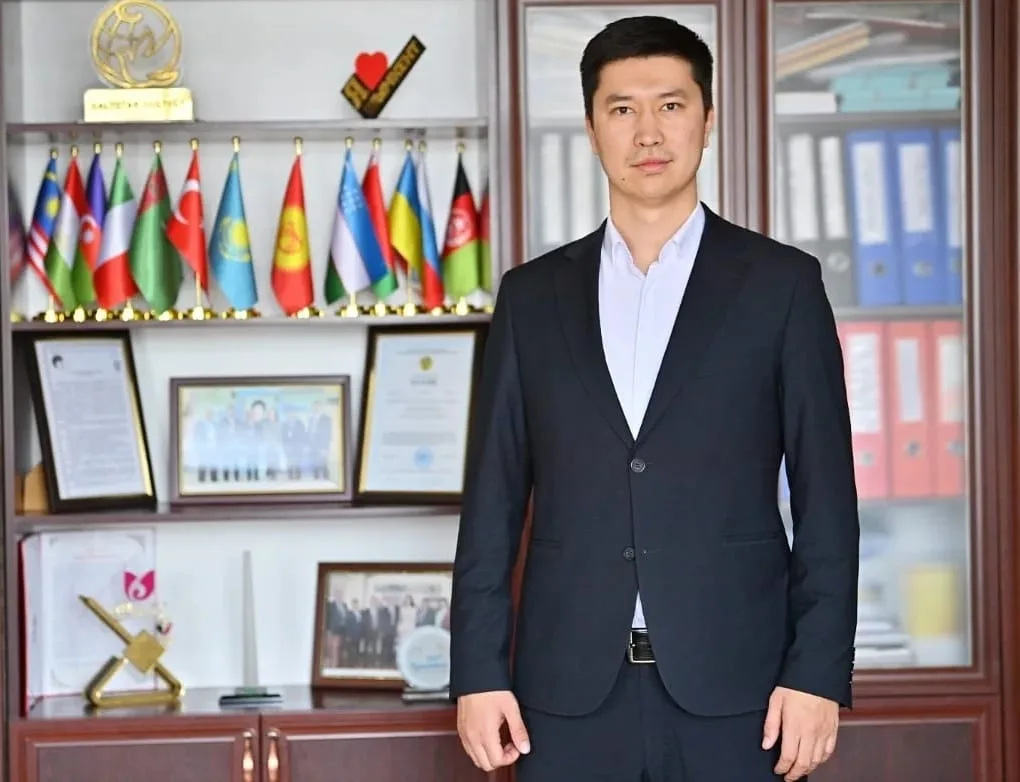
The IT Department of Academician А. Қуатбеков Peoples’ Friendship University is a vital strategic driver for the university community. Despite some instability, we have stepped boldly into the era of full digitalisation and artificial intelligence. AI’s rapid development is significantly influencing the outlook and behaviour of staff, and especially students. There is no alternative to this process, as it is fundamentally changing the entire community’s working practices and way of life. We must be ready and act decisively. As Vice-Rector for Digitalisation, I have therefore set a strategically important task: to transform Academician А. Қуатбеков Peoples’ Friendship University into a fully digital university within three years.
2026 is a decisive period in which artificial intelligence becomes part of the national development strategy and the university provides a firm foundation for this transition. Academician А. Қуатбеков Peoples’ Friendship University can become a driving force for education in the AI era, train leaders, build an innovation ecosystem and present Kazakhstan as a country that not only consumes technology but also creates it and exports value.
The future is already here — and a small team of young, energetic digital officers in the IT Department of Academician А. Қуатбеков Peoples’ Friendship University is shaping that future today.
Maksat YESSENOV
Vice-Rector for Digitalisation
Academician А. Қуатбеков
Peoples’ Friendship University


