Loading
The content is being prepared.
University
Department information, staff and documents.
The University traces its origins to 1999, when the South Kazakhstan Branch of the UNAT Higher Education Institution was established and admitted its first group of students to teacher-training programs.
In 2001, the South Kazakhstan Branch of the UNAT Higher Education Institution was reorganized into the Engineering and Humanities University (State License No. 0000084). The first group of students enrolled in technical programs that year.
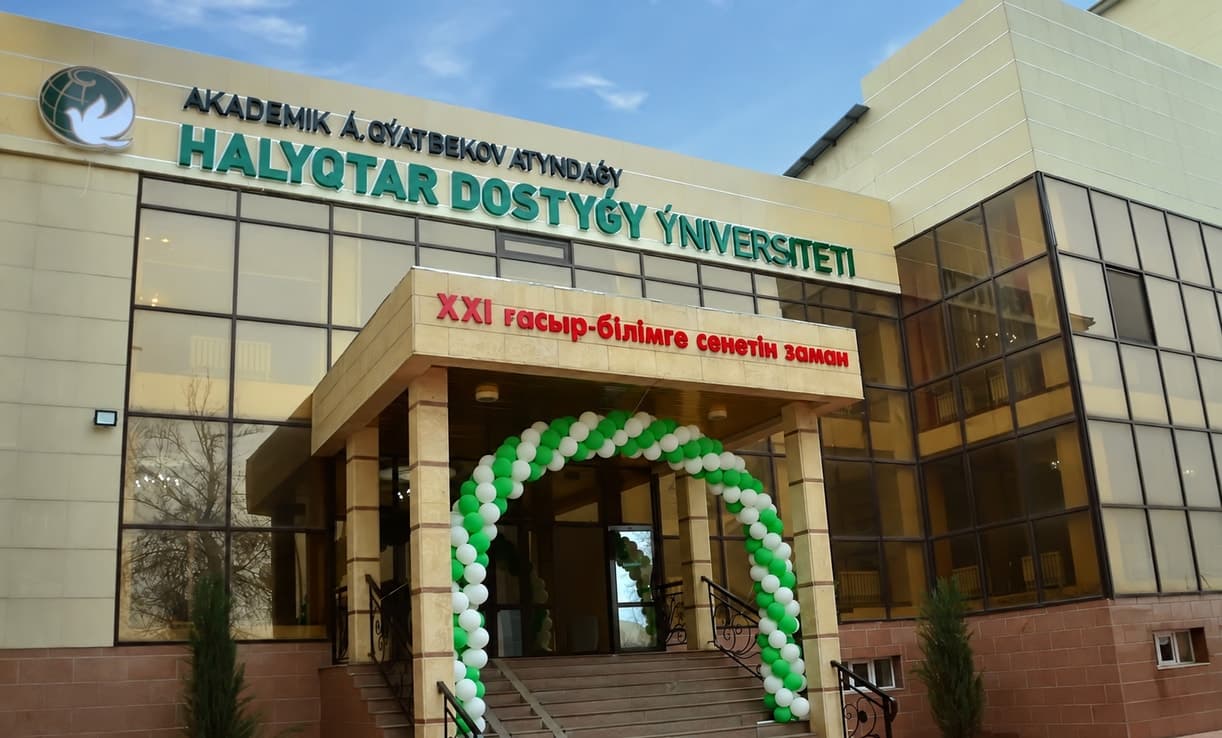
In 2019, the Kazakhstan University of Peoples’ Friendship was renamed the Institution “University of Peoples’ Friendship named after Academician A. Kuatbekov” (State License No. KZ87L00015319) in honor of its founder and first head, Abdimusa Muratovich Kuatbekov. He was an experienced administrator, Doctor of Chemical Sciences, professor, academician of the Kazakhstan National Academy of Natural Sciences, and recipient of the P. Kapitsa State Prize.
Today, the Institution “University of Peoples’ Friendship named after Academician A. Kuatbekov” is a multidisciplinary higher education institution offering programs in 34 undergraduate fields, 13 master’s fields, and 3 doctoral fields. It is one of Kazakhstan’s major private higher education institutions and has a highly qualified academic staff. Its faculty includes professors, recognized researchers and specialists, PhD holders, graduates of the Bolashak international scholarship program, founders of research schools, and authors of numerous publications and monographs.
In 2024, the Institution “University of Peoples’ Friendship named after Academician A. Kuatbekov” celebrated the 25th anniversary of its establishment. The University comprises 3 faculties and 10 departments. Its academic staff includes 28 Doctors of Sciences, 172 Candidates of Sciences, and 25 PhD holders. Faculty members have practical professional experience and meet the relevant qualification requirements. The proportion of academic staff holding advanced degrees is 57.3%. The University maintains a personnel reserve system with stringent requirements for candidates applying for vacant positions.
The University continuously works to expand its international partnerships. Cooperation agreements in education and science have been concluded with 100 leading foreign higher education institutions.
The University has a modern material and technical infrastructure that meets sanitary standards and the requirements of state educational standards for the programs offered. The facilities include 1 administrative building (total area: 564.4 m²), 5 academic buildings (total area: 14,066.1 m²), 3 sports complexes (total area: 4,177.1 m²), and 3 student dormitories (total area: 14,122.7 m²). A new, modern student residence with a capacity of 280 beds has also been commissioned. In addition, a seven-story IT building has been commissioned. The first floor houses the IT Hub; the fourth floor contains modern IT classrooms and a robotics laboratory; and the seventh floor features a modern assembly hall equipped with artificial intelligence technologies.
The Human Resources Department sees its development prospects in the adoption of new information technologies and digitalization. Digital technologies are essential to strengthening the competitiveness of the University’s research and educational processes. They are already making everyday life significantly easier for students and staff. The University currently operates the Documentolog electronic document management system successfully. A contactless access control system using facial recognition technology has also been successfully tested and implemented, featuring turnstiles equipped with Face ID.
The Human Resources Department is a structural unit of the organization responsible for human resource management (HR). It is not merely a functional unit but also represents the public face of the University, as prospective employees begin their introduction to the organization through the Human Resources Department.
The Department carries out activities to monitor employees’ compliance with labor discipline, maintains records relating to employee attendance and adherence to work schedules, and conducts scheduled reviews of the status of documentation maintained by academic departments. In its activities, the Human Resources Department is guided by legislative and regulatory documents governing higher education. Its primary objective is to ensure effective staff performance and create conditions for professional development and career growth.
The Human Resources Department performs a wide range of functions. The Head of the Department bears overall responsibility for the completeness, quality, and timely execution of its duties and reports directly to the Rector of the University.
The Head of the Human Resources Department, Salamat Perdeshovna Kulumbetova, has extensive practical experience in personnel management, including the development and implementation of human resource management strategies, coordination of departmental activities, and participation in strategic decision-making at the University management level.
The work of the Department’s small team would not be possible without close cooperation with all academic departments and structural units of the University. To perform its functions effectively, the Human Resources Department must maintain regular and close cooperation with other departments:
— Cooperation with the Accounting Department (to address matters related to remuneration; the Human Resources Department provides Accounting with documents and copies of orders concerning employee recruitment and dismissal, business trips, leave, employee incentives, disciplinary sanctions, and other relevant matters);
— Cooperation with the Legal Department (the Legal Department provides Human Resources staff with information on the latest amendments to applicable legislation and offers comprehensive legal support).
Working in Human Resources requires a broad range of skills and competencies, including communication, analytical, and organizational skills, as well as knowledge of labor legislation. The Human Resources Department plays a key role in maintaining employee satisfaction, managing human resources, and ensuring compliance with applicable laws. These factors make the work of the Human Resources Department important and valuable to any organization.
The primary task of the Human Resources Department is to maintain accurate records of employees’ work and determine the number of working days, days off, and sick leave days for payroll calculations, leave administration, and submission of information to the organization’s Accounting Department.
The main tasks of the Human Resources Department are:
organizing the selection, recruitment, and hiring of personnel with the required qualifications and in the required numbers. Recruitment is carried out using specially developed strategies, ranging from publishing vacancy announcements in the media and working with employment services to applying selection methods, testing, specialist onboarding procedures, and subsequent professional development;
staffing and workforce allocation;
establishing an effective system for managing permanent staff;
establishing a personnel reserve;
developing human resources management technologies.
The activities of the Human Resources Department include a wide range of functions.
personnel recruitment and hiring (the Human Resources Department searches for and selects candidates for vacant positions, conducts interviews, and organizes the onboarding of new employees);
personnel records management (the Human Resources Department maintains employee records and prepares employment contracts and other documents related to employees’ work activities);
organization of personnel training and development (the Human Resources Department develops and implements training programs and encourages employees’ professional development);
personnel management (the Human Resources Department monitors employees’ performance of their duties, evaluates their productivity, and regulates internal employment relations);
development and implementation of a motivation system (the Human Resources Department develops and implements a system of rewards and incentives to improve employee motivation and productivity);
compliance with labor legislation (the Human Resources Department monitors compliance with labor legislation within the organization and participates in resolving labor disputes and conflicts);
timely registration of employees and students for military service records and issuance of certificates to students;
processing the hiring, transfer, and dismissal of employees in accordance with the Labor Code of the Republic of Kazakhstan;
maintaining, completing, and storing employees’ employment record books;
processing annual leave in accordance with approved schedules;
processing and maintaining records of employee business trips.